
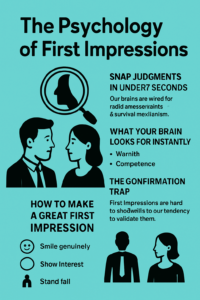
When we meet someone for the first time, we quickly form an opinion about them without even thinking much. This is called The Psychology of First Impressions. It happens within a few seconds and is based on small things like appearance, behavior, and communication. Even without full information, our mind makes a quick judgment. This process is automatic, and most of the time we are not even aware that we are doing it.
Why First Impressions Matter?
In simple words, first impression is the first thought or feeling we develop when we see someone for the first time. It is usually based on what we observe in the initial few moments. For example, if a person is smiling and speaking confidently, we may think they are friendly and trustworthy. But if someone avoids eye contact or looks confused, we may feel unsure about them. These small signals create a big impact on our thinking.
First Impression is the Last Impression
First impressions are very important in daily life. They affect how people see us and how they behave with us. A good first impression can help build trust and strong relationships, while a bad first impression can create distance. People often decide how to treat us based on the first impression we create. This is why it is said that the first impression is the last impression, even though it can change over time.
First Impressions in Professional Scenarios
In professional situations, first impression plays a very important role. For example, during a job interview, the way a person enters the room, greets the interviewer, and communicates can influence the final decision. Even before answering any questions, the interviewer may already have an opinion. Similarly, in business meetings or client interactions, first impression can affect trust and future opportunities.
How First Impressions Shape Our Decisions and Perceptions
The reason behind this comes from human psychology. Our brain works very fast and tries to save time and energy. Instead of thinking deeply about every situation, it makes quick decisions based on what it sees. It uses past experiences and small signals to form opinions. This helps us react quickly, but sometimes it can also lead to wrong judgments.
Our brain is trained to notice patterns and make decisions quickly. If we have seen similar behaviour in the past, we connect it with our current experience. For example, if we have met confident people who were helpful, we may assume that every confident person is helpful. This is how our brain simplifies decision-making.
Key Factors that Influence First Impressions
There are different factors that influence first impression. Appearance plays a big role because the way a person looks creates the first impact. Clothing, grooming, and overall presentation matter a lot. Body language is another important factor. Posture, eye contact, and hand movements show confidence or nervousness. A person who stands straight and maintains eye contact is often seen as confident.
Tone of voice also matters a lot. The way we speak, including our tone and clarity, affects how others perceive us. A clear and confident voice creates a positive feeling, while a low or unclear voice may create doubt. Facial expressions are also important. A smile can make a person look friendly, while a serious or dull face may create a negative impression.
Confidence is one of the strongest factors in creating a good first impression. People who appear confident are often seen as more capable and trustworthy. Confidence does not mean being overconfident, but it means being comfortable and clear in communication.
The Role of First Impressions in the Digital World
First impression is not only about people. It is also very important in the digital world. When someone visits a website or social media page, they decide quickly whether they like it or not. This decision is based on design, content, and presentation. If a website looks clean, simple, and easy to understand, users are more likely to stay and explore. But if it looks confusing or messy, they may leave immediately.
In today’s digital world, first impression plays a huge role in marketing. Brands focus on how their product or service looks at first glance. They use attractive packaging, strong headlines, and engaging content to create a positive impact. A good first impression can increase interest and encourage people to explore more. It also helps in building trust and improving customer experience.
How to Leave a Lasting First Impression
Creating a good first impression is not very difficult. It requires attention to small details. Dressing neatly, speaking clearly, and maintaining eye contact can help a lot in personal interactions. Being polite and confident also creates a positive impact. Listening carefully and responding properly also helps in building a good impression.
In professional situations, being prepared and punctual is very important. Arriving on time and showing readiness reflects seriousness and responsibility. In online content, using simple language, clear structure, and proper formatting helps in creating a better impression.
What Not to Do: First Impression Mistakes to Avoid
However, many people make common mistakes that affect their first impression. Poor communication is one of the major problems. If a person is not able to express their thoughts clearly, it creates confusion. Negative body language like avoiding eye contact or showing lack of interest can also create a bad impression.
Messy appearance or unorganized content can reduce trust. In the digital world, if a website has too much information, poor design, or difficult navigation, users may leave quickly. Using complicated language can also make it difficult for others to understand, which creates a negative experience.
Another common mistake is trying too hard to impress. Being unnatural or fake can be easily noticed and may create a negative impression. It is always better to be natural and confident rather than pretending to be someone else.
Can You Fix a Bad First Impression? Here’s How
Although first impressions are very powerful, they are not always permanent. It is possible to change them, but it takes time and effort. A person needs to show consistent positive behavior and clear communication to improve a negative impression. However, it is always better to create a good first impression from the beginning instead of trying to fix it later.
Conclusion- The Psychology of First Impressions
In the end, first impression happens very quickly but stays for a long time. It plays an important role in shaping relationships, decisions, and opportunities. Whether it is in personal life, professional life, or digital platforms, the way we present ourselves matters a lot. That is why it is important to focus on our appearance, communication, and behavior to create a strong and positive impression.