
By The Millet Nation | Health & Nutrition | 7 min read
Let’s be honest. When was the last time your lunch was a bowl of bajra khichdi or a plate of ragi roti? Probably not recently — and that’s not entirely your fault.
For thousands of years, millets were the backbone of Indian kitchens. Ragi, bajra, foxtail millet, kodo millet, little millet — these ancient grains fed generations of Indians and kept them strong. Then somewhere along the way, white rice, maida, and refined wheat quietly took over our plates. And we barely noticed it happening.
So what really went wrong? Was it about better nutrition? Or was it something else entirely?
The Great Grain Swap — How Did It Happen?
1. Wars, Policies & the Green Revolution
The shift didn’t happen overnight. It started in the 1960s during a period of food scarcity, when India was heavily dependent on food imports. The Green Revolution was launched to achieve food security — and it did. But it heavily promoted high-yield varieties of wheat and rice, flooding the country with subsidised grain.
Millets, on the other hand, received little to no government support. They were slowly pushed out of farming priorities and, eventually, out of our kitchens.
2. Pricing & Availability
As wheat and rice became cheaper and more widely available through the Public Distribution System (PDS), millets became comparatively harder to find and more expensive. Families, especially in urban areas, naturally gravitated towards what was affordable and easy to get.
It wasn’t a choice against millets. It was a choice driven by economics.
3. Modernisation & the “Refined = Premium” Myth
As cities grew and lifestyles changed, refined foods became status symbols. White bread. Fine maida. Polished rice. These were seen as “modern” and “clean” — while millets were labelled as “poor man’s food.”
Urbanisation brought with it packaged, convenient foods that fit into fast-paced schedules. Millets, which required soaking, grinding, or longer cooking times, felt like a step backwards.
4. The Power of Marketing
Big food companies poured money into marketing refined products. Breakfast cereals, instant noodles, white bread — they were everywhere: on TV, in schools, in supermarkets. Millets had no such champions.
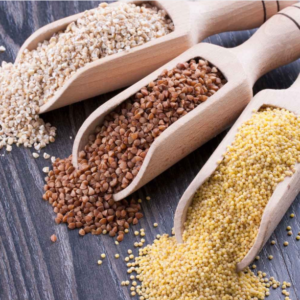
The result? Two generations grew up not knowing what foxtail millet or little millet even looked like.
What We’ve Been Missing All Along
Here’s where it gets eye-opening. While refined food was winning the marketing war, it was losing the nutrition battle — quietly, but consistently.
What Millets Give You (That Refined Grains Don’t)
| Nutrient | Millets | Refined Wheat/Rice |
|---|---|---|
| Dietary Fibre | High | Very Low |
| Glycemic Index | Low (41–68) | High (70–90+) |
| Iron | Rich (especially Ragi, Bajra) | Negligible |
| Calcium | High (Ragi has more than milk per 100g) | Low |
| Magnesium & Zinc | Present naturally | Stripped during processing |
| Protein | Good quality | Moderate |
| Antioxidants | Naturally occurring | Mostly absent |
- Ragi (Finger Millet) is one of the richest plant-based sources of calcium — crucial for bones and teeth.
- Bajra (Pearl Millet) is loaded with iron and magnesium, making it excellent for energy and blood health.
- Foxtail Millet has a very low glycemic index, making it ideal for managing blood sugar.
- Kodo Millet is rich in antioxidants and particularly good for the heart.
- Little Millet is packed with B vitamins and zinc — key for immunity and metabolism.
The Hidden Damage of Refined Foods
Refined grains go through heavy processing — milling, polishing, bleaching — which strips away:
- The bran (where all the fibre lives)
- The germ (where vitamins and healthy fats are packed)
- The natural minerals
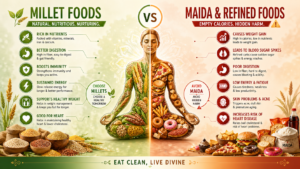
What’s left is essentially empty calories — a spike in blood sugar, followed by a crash, followed by hunger again. This cycle, repeated daily over years, is silently linked to:
- Type 2 Diabetes — India is now the diabetes capital of the world
- Obesity & weight gain — high GI foods trigger fat storage
- Digestive issues — lack of fibre leads to constipation and gut imbalances
- Nutritional deficiencies — anaemia, weak bones, poor immunity
- Chronic inflammation — refined carbs are increasingly linked to systemic inflammation
We didn’t trade millets for better nutrition. We traded them for convenience — and we’re paying the price in doctor visits and lifestyle diseases.
“But Millets Taste Boring, Right?” — Wrong. Completely Wrong.
This is perhaps the biggest myth holding people back from making the switch.
The truth? Millets are incredibly versatile. They can be used to make practically anything — and when done right, you honestly cannot tell the difference.
Think about it:
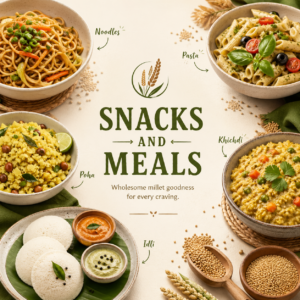
- 🍪 Cookies & biscuits — ragi cookies taste just as good (often better) than regular ones
- 🍜 Noodles — foxtail millet noodles with the same chew and texture you love
- 🍟 Chips & namkeen — bajra and millet-based snacks that are crispy, tasty, and guilt-free
- 🍚 Khichdi & poha — comfort food, now with a nutritional upgrade
- 🧁 Vermicelli & frains — light, delicious, and far more nourishing
- 🌾 Flours — swap maida with millet flours in practically any recipe
At The Millet Nation, we’ve done exactly this. Every product we make — from our crunchy chips to our ready-to-eat khichdi — is crafted so that you don’t have to compromise on taste to eat healthy. Millet food isn’t rabbit food. It’s real food, made better.
Millets Are Good for You — And for the Planet
Here’s something most people don’t know: millets are one of the most sustainable crops on earth.
- They grow in dry, low-rainfall areas — perfect for India’s diverse geography
- They need far less water than rice or wheat
- They don’t require heavy pesticides or fertilisers
- They are naturally drought-resistant
- They replenish soil nutrients rather than depleting them
Choosing millet products isn’t just a personal health decision — it’s an act of environmental responsibility. Every pack of millet snacks you buy is a small vote for sustainable agriculture and a healthier planet.
It’s Time to Come Back to Our Roots
The shift from millets wasn’t because they were inferior. It was because of economics, policy, and powerful marketing. But the good news? That shift is reversible.
More and more health-conscious Indians are rediscovering what their grandparents already knew — that millets are nutritional powerhouses that taste great, keep you full longer, and support long-term health.
You don’t have to overhaul your entire diet overnight. Start small. Swap your evening snack. Try a millet-based breakfast. Explore a new recipe. The door back to good health is open — and it’s delicious on the other side.
Ready to Make the Switch?
At The Millet Nation, we make it easy, tasty, and totally guilt-free. Explore our range of:
✅ Millet Chips & Namkeen
✅ Ragi & Millet Cookies
✅ Bajra & Foxtail Millet Noodles
✅ Millet Khichdi, Poha & Vermicelli
✅ Millet Flours & Frains
Your body has been waiting for this. Give it what it deserves.
Shop Now at The Millet Nation — because healthy should never mean boring.